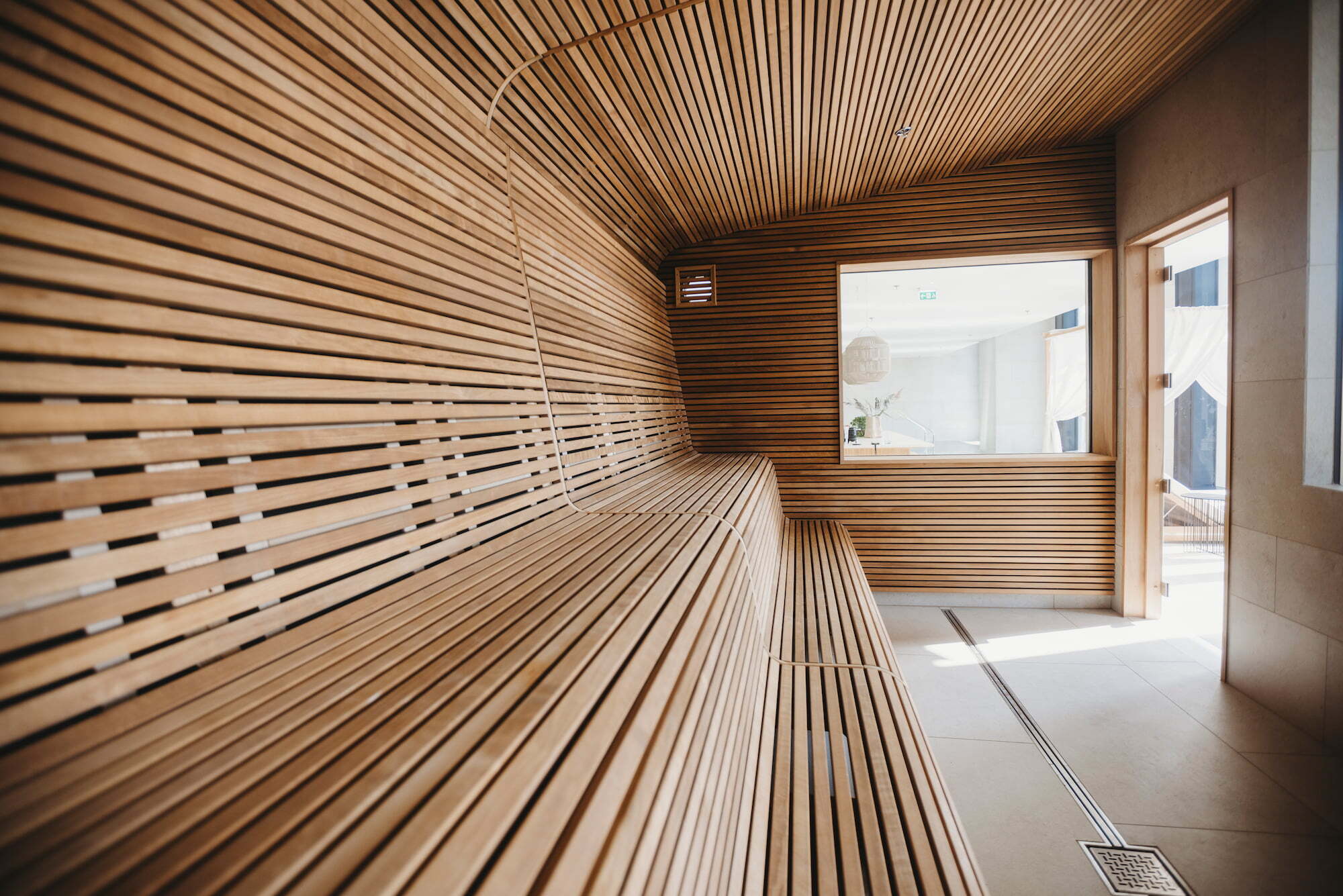
The sauna has become a natural part of many contemporary wellness environments. From private residences to hotels, spas and public facilities, it is increasingly being specified as part of projects where wellbeing, recovery and thoughtful design are prioritised.
Yet designing a sauna involves more than selecting materials and determining its location within a building. Many of the factors that influence how a sauna performs are established long before construction begins.
A well-designed sauna should feel effortless. Heat and airflow should work together to create a comfortable sauna experience. The air should feel fresh. The benches should be comfortable to sit on. The space should heat efficiently and perform reliably year after year.
Achieving this requires careful planning. Room proportions, ventilation, material choices, heater placement and bench layout all influence the quality of the sauna experience. Getting these details right at the design stage helps avoid unnecessary compromises later in the project.
.jpg?width=2000&height=1000&name=Namnl%C3%B6s%20design%20(53).jpg)
Start with function
A successful sauna is always designed from the inside out. While appearance is important, performance should guide the design process. Heat distribution, airflow and user comfort are closely connected, and seemingly small decisions can have a significant impact on how the sauna functions once completed.
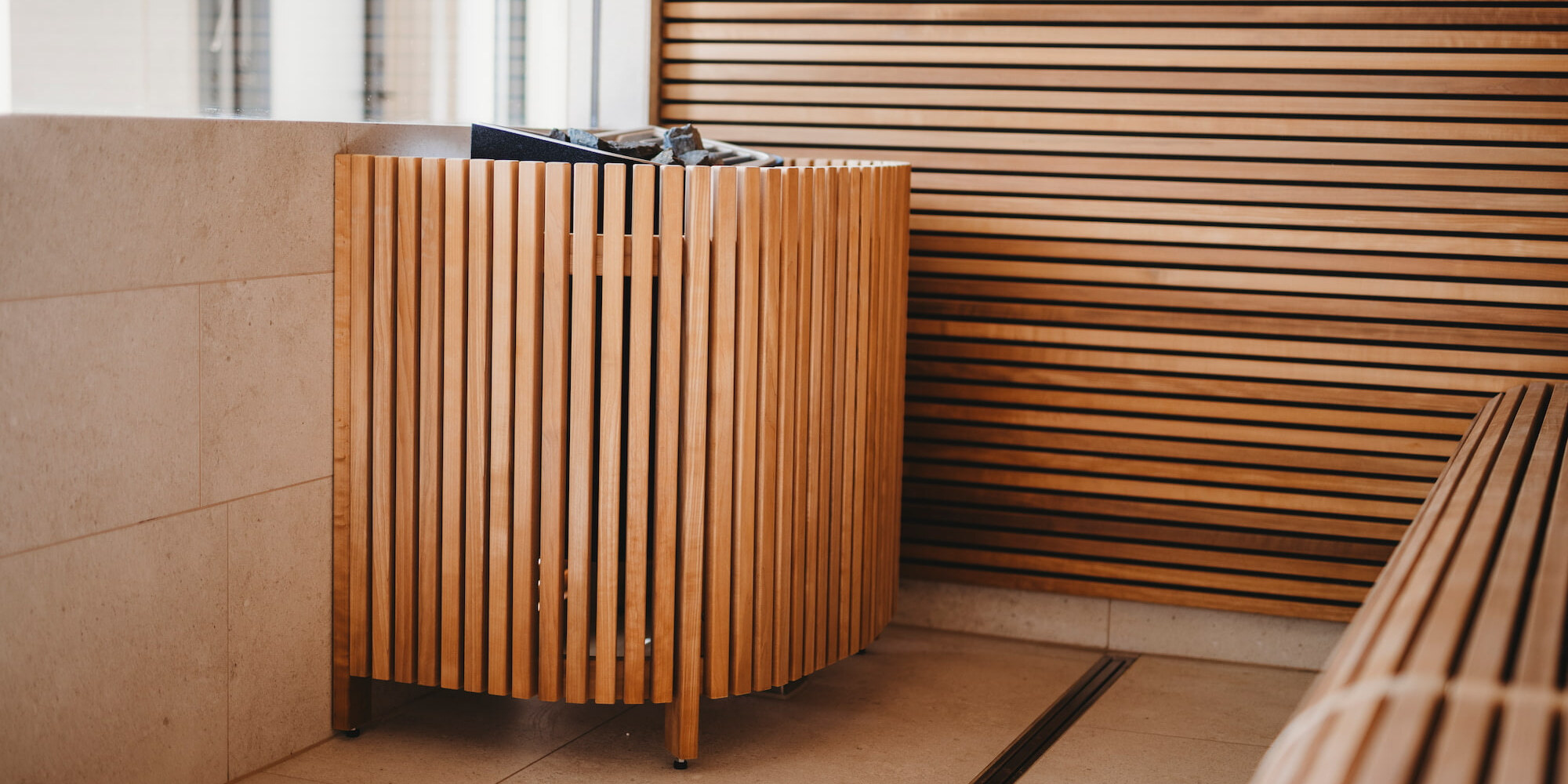
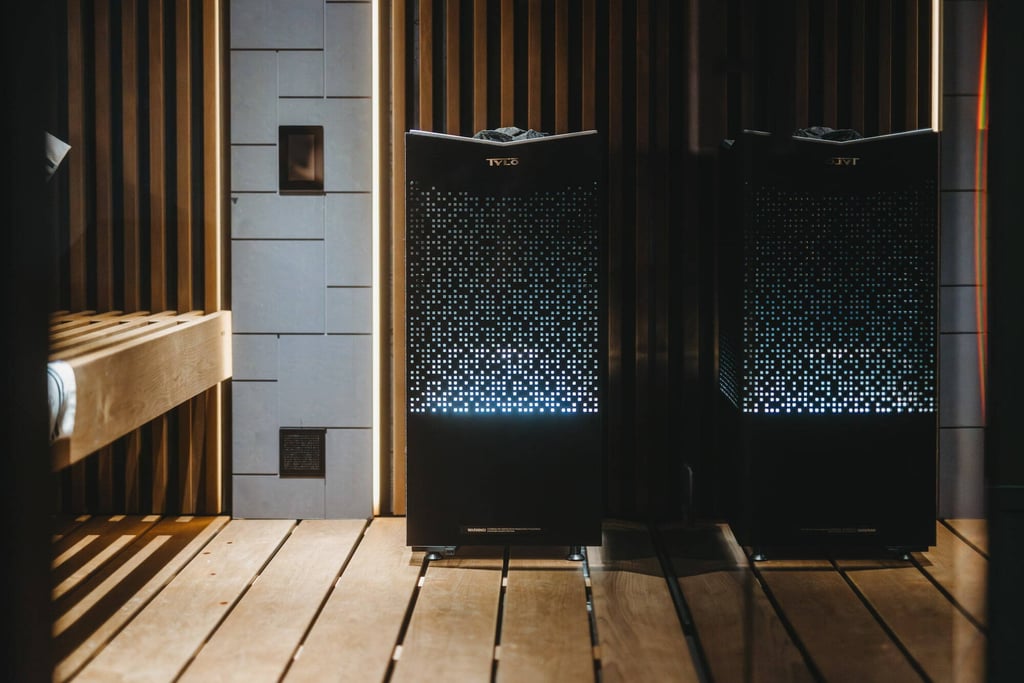
The position of the heater, for example, influences both air circulation and temperature consistency. In many cases, locating the heater and sauna door on the same wall helps create a more balanced flow of heat throughout the room. Similarly, the placement of supply and extract ventilation plays an important role in maintaining a comfortable environment.
Room proportions matter
Architectural projects often favour generous ceiling heights, but sauna design follows a different set of principles. Because warm air naturally rises, excessive ceiling height can reduce heating efficiency and make it more difficult to achieve consistent temperatures throughout the bathing area. Well-considered room proportions help ensure that heat remains where it is intended to be experienced.
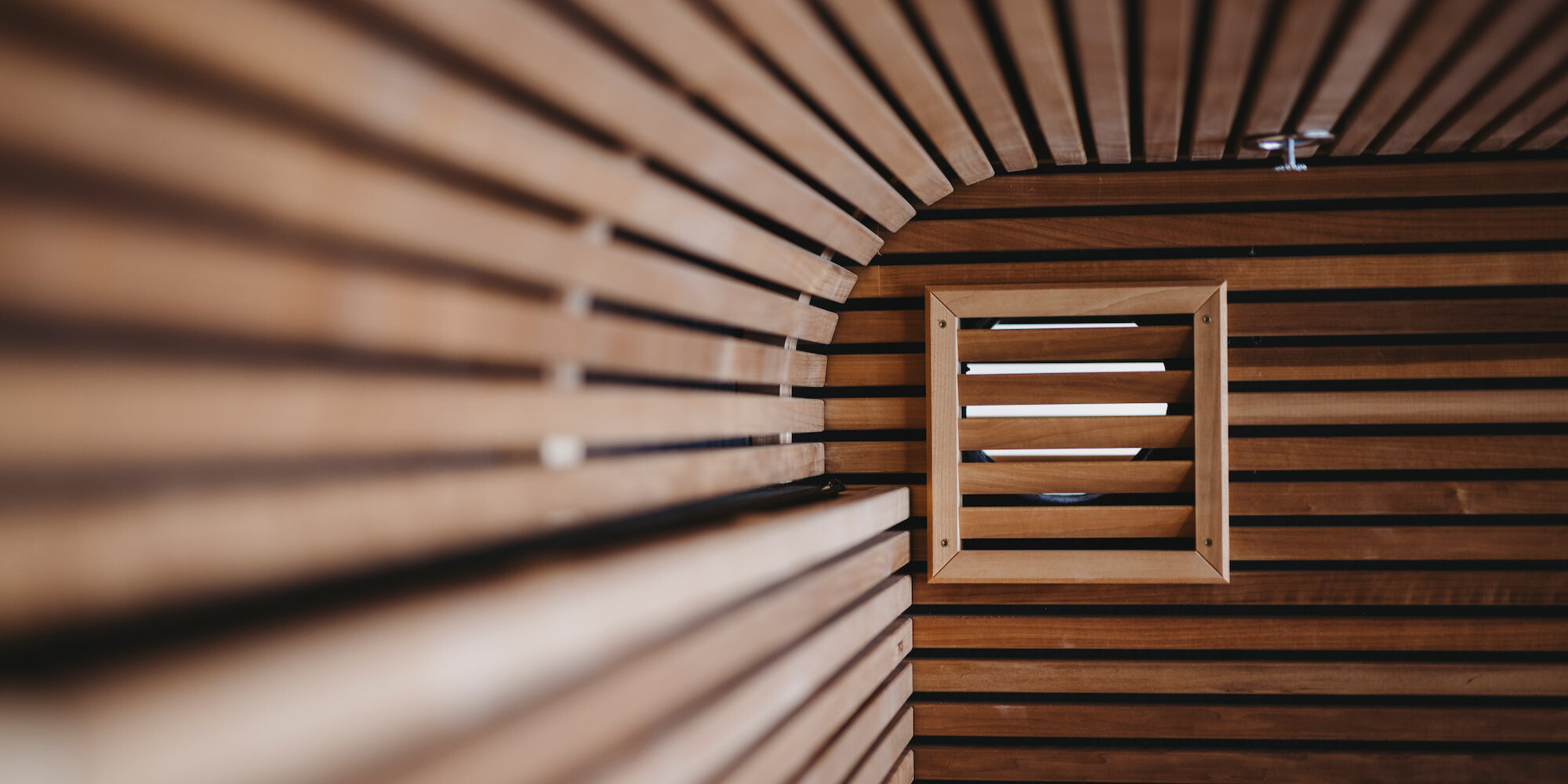
Ventilation should never be an afterthought
Good ventilation is essential to the performance of any sauna. Fresh air should enter and circulate through the room in a controlled manner before being extracted. When ventilation is designed correctly, it contributes to a more comfortable bathing experience, more stable temperatures and improved energy efficiency.
Materials influence performance
Material selection affects more than the visual character of a sauna. Wood remains the preferred material for sauna panelling and interiors due to its natural thermal properties and ability to create a warm and inviting environment. Larger areas of glass, stone, tile or concrete can influence heating performance and should be considered carefully when sizing the heater and planning the space.
Design for the user experience
Ultimately, a sauna is designed for its users. Bench heights, seating layouts, lighting and the overall layout of the space all contribute to the experience. A well-planned layout supports comfort, relaxation and ease of use.
The most successful sauna projects combine technical expertise with thoughtful design. When both are considered from the outset, the result is a sauna that performs as beautifully as it looks.
Download the complete guide
To help architects, designers and project developers create better sauna environments, Tylö has developed The Art of Sauna Design — a practical guide covering ventilation principles, heater placement, room proportions, bench design and other key considerations before construction begins.
Get practical guidance for your next sauna project.
.jpg?width=1024&height=1024&name=Tyl%C3%B6%20showroom%20vt24-404%20(1).jpg)
.jpg?width=1024&height=1024&name=Namnl%C3%B6s%20design%20(1).jpg)
.jpg?width=1024&height=1024&name=Tyl%C3%B6%202025-09-035806%20(1).jpg)